
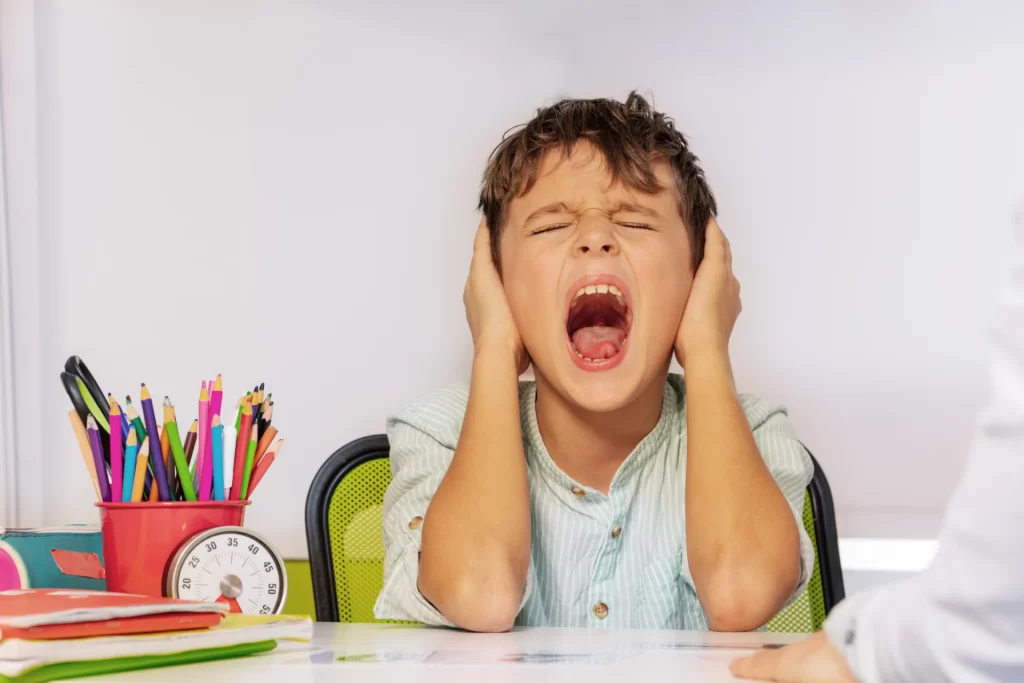
Sensory meltdowns can be overwhelming—for both kids and parents. They happen when a child’s nervous system is overloaded with too much input, like noise, lights, or crowds. Unlike tantrums, which are about control, sensory meltdowns are an out-of-control response to feeling overstimulated and overwhelmed.
If your child struggles with sensory processing, autism, or ADHD, you might notice meltdowns happening in busy or unpredictable situations, during big transitions, or after a long day of holding it together. Signs of a meltdown might include:
- crying
- yelling
- covering their ears
- running away
- repetitive movements like rocking
When a meltdown happens, the most important thing you can do is provide calm and safety. Speak gently and avoid asking too many questions. If possible, help your child get to a quieter space where they can decompress. Offering sensory tools, like headphones or a favorite comfort item, can also help.
After the meltdown, give your child time to recover before talking about what happened. When they’re ready, you can discuss how to handle similar situations in the future. For example, if a loud birthday party was too much, next time you might limit the time spent there or bring tools like noise-canceling headphones.
To reduce meltdowns, try to identify triggers and build in sensory breaks during the day. Quiet time, physical activities, or calming tools can help your child reset before they become overwhelmed. Routines and predictability are also key—kids often feel safer when they know what to expect.
Remember, a sensory meltdown is not a sign of bad behavior or parenting. It’s simply your child’s way of saying, “I’m overwhelmed.” By responding with patience and empathy, you’re showing them they can rely on you in tough moments—and that’s a powerful way to build trust and resilience!
Sources:
https://sensoryhealth.org/basic/pediatric-sensory-differences-impact-and-therapy
https://www.understood.org/en/articles/sensory-processing-challenges-fact-sheet