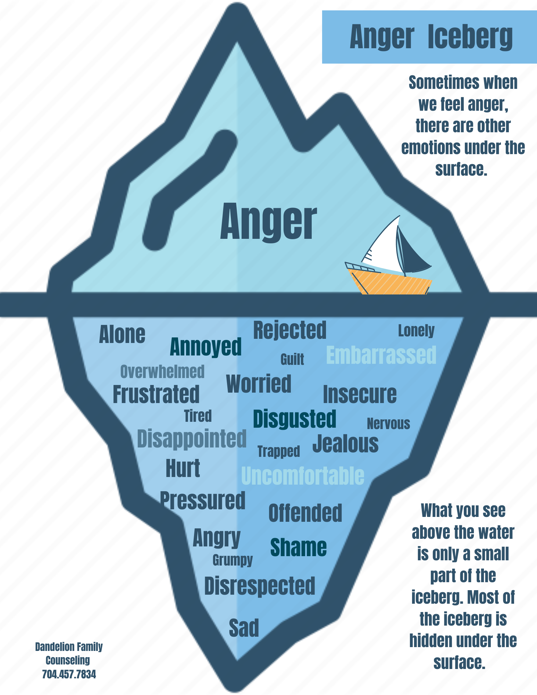

When it comes to parenting ADHD or Autistic children, one of the most confusing and challenging emotions to navigate is anger. Outbursts, shutdowns, or sudden meltdowns can seem to come out of nowhere; but often, they’re just the tip of the iceberg.
That’s where the Anger Iceberg comes in. It’s a tool we use in therapy to help children and parents understand what’s really going on underneath the surface.
What Is the Anger Iceberg?
Think of anger like an iceberg. What we see, yelling, withdrawing, throwing, arguing, is just the small visible tip. Underneath that visible anger lies a much larger collection of hidden emotions: fear, sadness, anxiety, embarrassment, shame, rejection, and more.
This activity helps children identify those hidden feelings and gives parents insight into what’s really driving their behavior.
Why This Works for ADHD & Autistic Kids:
ADHD and Autistic children (especially externalizing types) often struggle to express or even recognize their own emotions. They may act out because they’re overwhelmed, confused, or hurt, but don’t yet have the words or awareness to say so.
By slowing down and using tools like the Anger Iceberg, we give kids a chance to explore their emotions safely and without judgment.
What the Process Looks Like in Therapy:
- Create Safety First
I tell the child:
“I just want to learn about the things that make you angry. Anger is like an iceberg—what you show and what you feel can be very different. You’re not in trouble. In fact, I’m going to make your parents do this too!” - Choose a Favorite Color
Kids pick their favorite marker to circle emotions on the iceberg chart. This adds a sense of ownership and positivity before diving into something emotionally difficult. - Circle What Feels True
I ask, “When you’re looking, acting, or feeling angry—what’s actually going on?”
Kids usually circle 6–10 feelings, and that’s totally normal.- Less than 6? They might not be ready or feel safe enough yet.
- More than 10? They may be very aware—or have a lot of emotions to process.
- Circle everything? That could signal overwhelm, defiance, or a fear of “getting it wrong.”
- Talk Through It
We define each feeling using real-life examples from their home life.
“What does your mom or dad do that makes you nervous? Embarrassed? Sad?”
If the child is very young or timid, we may take this step slowly—just one emotion at a time over several sessions. - Parents Do It Too
I always invite parents to do the same activity. That way, they can begin to notice how their emotional triggers differ from their child’s.
For example:
“The things that make you angry are the exact opposite of what upsets your child.”
This can be a powerful insight and a great starting point for stronger family communication.
Tips for Parents Using the Anger Iceberg at Home:
- Don’t rush it. Your child may need time to warm up to this activity.
- Use it repeatedly. Emotional awareness builds over time—repeating the activity every few months can reveal growth.
- Make it safe. Let your child know they’re not in trouble. This is about understanding, not blaming.
- Be ready to go first. If you’re doing it at home, consider sharing your own iceberg first to model vulnerability.
- Send them with support. If your child is in therapy, share your version with the therapist—it creates a more complete picture.
Final Thoughts:
ADHD and Autistic children aren’t trying to be difficult. They’re doing their best with the tools they have. By helping them recognize what’s beneath their anger, we’re not only helping reduce outbursts; we’re also giving them a foundation for emotional intelligence, empathy, and self-regulation that will serve them for life.
And remember: You’re not alone in this. Whether you’re using this tool with a therapist or at home, the goal is the same: to strengthen connection, increase understanding, and help your child thrive.